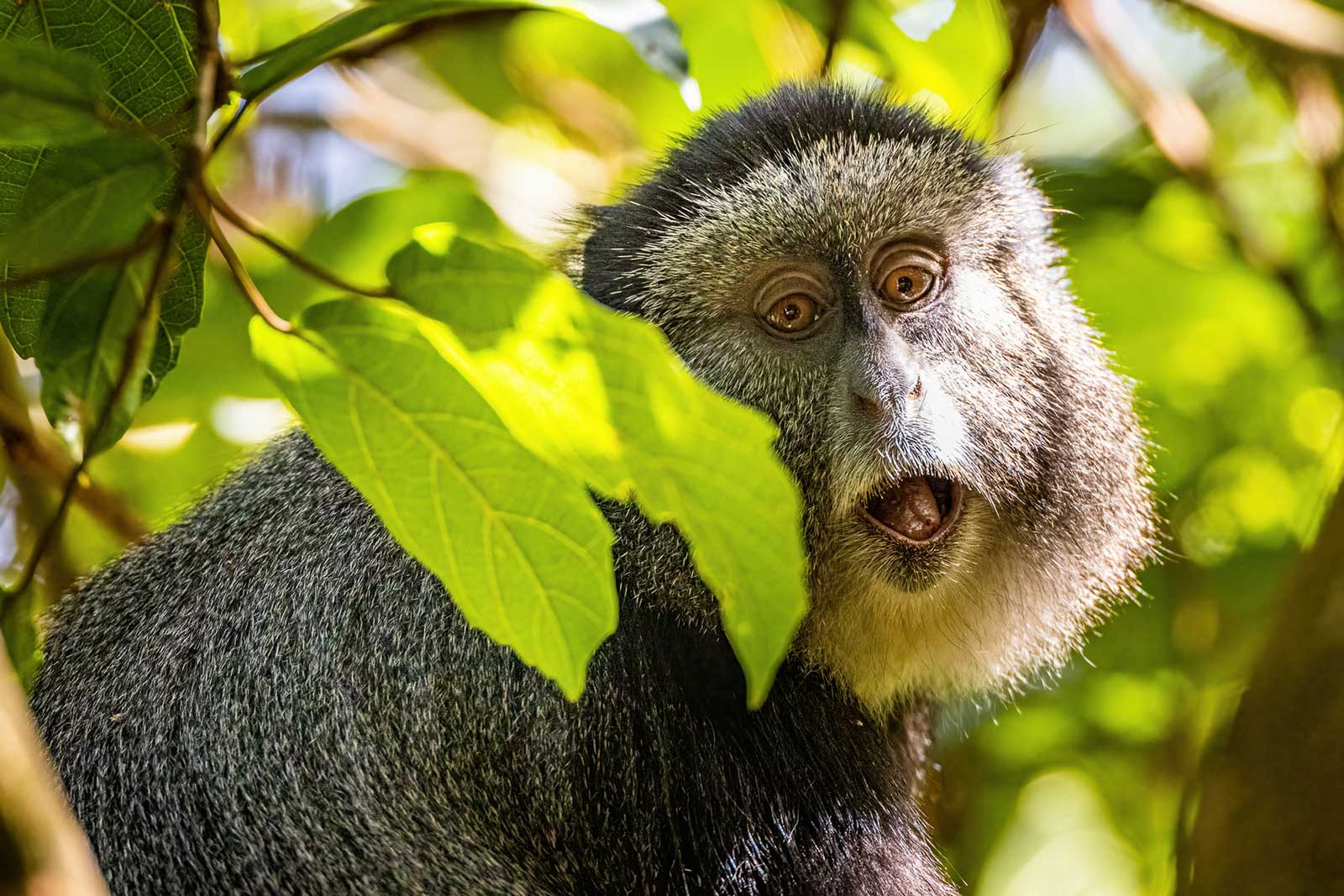
5 Facts about Golden Monkeys
The 5 facts about golden monkeys: Golden monkeys also known as (Cercopithecus kandti is another primate species found in Uganda, Rwanda, and the Democratic Republic of the Congo. Although golden monkey trekking is not as popular as mountain gorilla trekking, golden monkeys have gradually gained fame in the tourism industry over the past decades.
Golden monkey trekking tours in Uganda can be done in Mgahinga Gorilla National Park. In Rwanda, golden monkey tours can be done in Volcanoes National Park. The Virunga National Park in the eastern parts of the Democratic Republic of Congo offers excellent golden monkey trekking safaris.
Like mountain gorillas and chimpanzees, golden monkeys live in groups or families. However, golden monkey families comprise many members of about 40 members per family. This makes golden monkey trekking in Uganda, Rwanda, and Congo less challenging.
The 5 facts about golden monkeys or Things to know about golden monkeys
- Golden monkeys (Cercopithecus kandti) are a species of Old World monkeys found in the Virunga Mountains of Central Africa. They are endemic to the bamboo forests of the Volcanoes National Park in Rwanda, the Mgahinga Gorilla National Park in Uganda, and the Virunga National Park in the Democratic Republic of Congo.
- Golden monkeys are named for their distinctive bright golden-orange fur, which sets them apart from other monkey species. They have a fluffy tail, black limbs, and a black cap on their heads. Their cheeks and the upper sides of their bodies are also adorned with golden fur.
- Golden monkeys are herbivores designed genetically to feed on plant material. They do not feed on fresh meat. They fancy eating fruits, shoots, and leaves. Their habitats are favorable sources of their food and golden monkeys feed while climbing from tree to tree. In the rainy seasons, golden monkeys are fond of feeding on bamboo leaves.
- Golden monkeys live in social groups called troops, consisting of multiple individuals led by a dominant male. Troops typically range from 30 to 80 individuals. These monkeys are highly active and spend their days foraging for bamboo leaves, shoots, fruits, and other vegetation. They are agile climbers and are known for their acrobatic leaps through the bamboo canopy.
- Golden monkeys are classified as endangered by the International Union for Conservation of Nature (IUCN). Their population has declined due to habitat loss, fragmentation, and poaching. Conservation efforts are in place to protect their habitat and promote their conservation, including ecotourism initiatives that provide economic incentives for their preservation.
How is golden monkey trekking done?
Like mountain gorilla trekking, golden monkey trekking usually starts with breakfast at your lodge. You will transfer to the park headquarters for briefing. You will learn about the Golden Monkey trekking rules and regulations. The park authorities will also group you with fellow trekkers and assign a Golden Monkey expert guide. The guide will lead you to the forests in search of these magical species.
Upon encountering the golden monkey family, you will be allowed to spend one precious hour in their presence. This hour is all yours to take as many pictures as you wish. Ensure to follow the Golden Monkey trekking photography rules and regulations. They are meant to ensure harmony between wildlife and humans throughout the trekking adventure.
Golden monkey habituation
Differentiating between golden monkey trekking and golden monkey habituation can be a challenging task, especially for beginners in planning East African primate tours or Golden monkey safaris.
Golden monkey habituation like golden monkey trekking involves travelers following a particular golden monkey group or troop and observing their behaviors. However, in Golden Monkey trekking travelers spend one hour in the presence of the Golden Monkey family. On the other hand, travelers are allowed to spend four hours with the golden monkeys during the habituation experience.
Golden monkey habituation is more of a research-centered safari activity that allows travelers to learn more about the behavioral characteristics of a particular golden monkey family. Golden monkey families have distinct behaviors and the difference can be drawn by spending more time with the monkeys (golden monkey habituation experience).
Golden monkey habituations also entail the process of making a particular golden monkey family get used to human presence. Much as golden monkeys are social animals, they remain wild animals. They have to get used to human visits before they are declared open for trekking. Once a golden monkey family is successfully habituated it is declared open for trekking. This is meant to maintain a balance between human experience and wildlife conservation in East Africa.
Book your golden monkey trekking or golden monkey habituation permit now and embark on the journey to discover the best primates in the world – Golden Monkeys.
Where to do golden monkey trekking tours in East Africa?
Golden monkey trekking is one of the popular primate safaris in East Africa next to mountain gorilla trekking and chimpanzee trekking tours. Choosing the right place for your golden monkey trekking safari is a fundamental step toward planning a primate safari in East Africa. Golden monkey trekking and golden monkey habituation tours can be done in the following places;
- Volcanoes National Park located in the northern parts of Rwanda
- Mgahinga Gorilla National Park located in the southwestern parts of Uganda
- Virunga National Park located in the eastern Democratic Republic of Congo
Note: All the above national parks are famous places for mountain gorilla trekking adventures and tours in East Africa. Book your combined golden monkey and gorilla trekking safari now and make your primate dreams come true.
What is the best time to do golden monkey tours in Africa?
Golden monkey trekking tours in Uganda, Rwanda, and the Democratic Republic of the Congo are done any time of the year. However, the dry seasons offer less challenging experiences. The dry seasons run from June to September and December to February. Booking your golden monkey trekking permits in advance is a better option, especially during the dry seasons.
This is because permits are in high demand during these seasons. The rainy seasons come with advantages like a reduction in accommodation prices and the national parks are less crowded hence guaranteeing an up close golden monkey experience.